
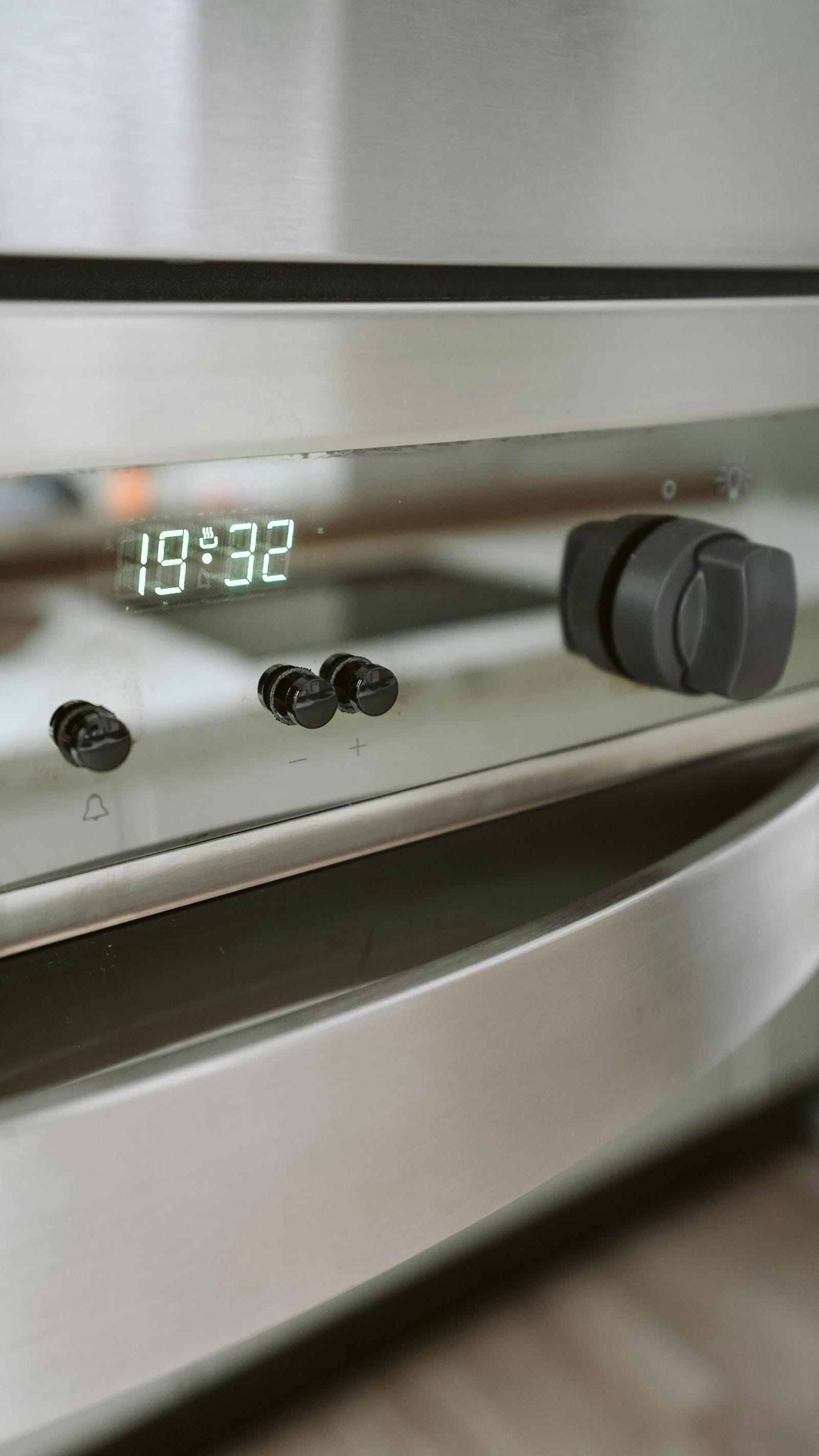
An oven that turns on but doesn’t get hot is one of the most frustrating appliance faults. The lights work, the fan spins, the display reads the temperature you set, but the food doesn’t cook. The cause depends entirely on whether you have a gas or an electric oven. Here’s how we diagnose each.
Electric ovens
Failed bake or grill element
The most common fault. The element is the visible loop of metal at the top (grill) or bottom (bake) of the oven cavity. It heats by passing current through the loop; over time the metal weakens and breaks. Often the break is invisible. A hairline fracture stops conduction.
What to check. Set the oven to bake at 180°C. Wait five minutes, then look in (with the light on). The bottom element should be glowing red-orange. If it’s dark, the bake element has failed. For grill mode, do the same with the top element.
Bake and grill elements are usually the cheapest oven repair. Most modern ovens have user-accessible elements held in by two screws at the back of the cavity. A replacement element costs around $80–$200 depending on brand, plus labour to fit.
Failed fan element (fan-forced ovens)
Fan ovens have a third element wrapped around the rear fan. It heats the air the fan circulates. When it fails, the oven shows the set temperature on the display but never reaches it. The cavity stays cool. Bake and grill might still work.
Faulty thermostat
The oven turns on, runs for a while, but never reaches temperature. Or massively overheats. The thermostat senses the cavity temperature and tells the elements when to cycle. When it drifts, the oven’s temperature is wrong even if the display says otherwise.
Tripped thermal cut-out
A safety device. If the oven has overheated in the past (often from a runaway thermostat or a blocked vent), the thermal cut-out trips and won’t reset itself. Some are manual-reset; most need replacing once tripped.
Gas ovens
Failed ignition
Gas ovens use either a spark ignitor (like a stove-top burner) or a glow-bar ignitor (a ceramic rod that gets hot and lights the gas). Glow-bar ignitors weaken over time. They still glow but not enough to light the gas. Symptoms: clicking or glowing but no flame, or a delayed light with a small thud.
This is the most common gas-oven fault we see. Replacement is straightforward once diagnosed.
Failed gas valve
The valve that opens the gas supply to the burner can fail closed (no gas) or fail open (gas without ignition. Dangerous, vented by the oven’s safety system). Either way, the oven won’t reach temperature.
Failed safety thermocouple
The thermocouple senses whether the gas is actually burning. If it senses no flame, it shuts the gas valve to prevent gas leaking. When the thermocouple itself fails, the valve shuts even when the flame is on. The oven lights briefly then dies.
What we DON’T recommend
- Don’t open the oven cavity to inspect the element while it’s hot. Wait until it’s fully cool.
- Don’t try to diagnose a gas leak yourself. If you smell gas, turn the supply off at the meter, ventilate, and call us or your gas fitter. Gas work is licensed-only in NSW.
- Don’t keep running an oven that overheats wildly. Thermostat faults can damage the cabinetry around the appliance.
When to call
Element diagnosis you can do yourself with a visual check. Anything past that. Thermostat, fan element, gas ignition, thermocouple. Needs test equipment.
Gas oven repairs in NSW are performed by licensed gas-fitters only.