
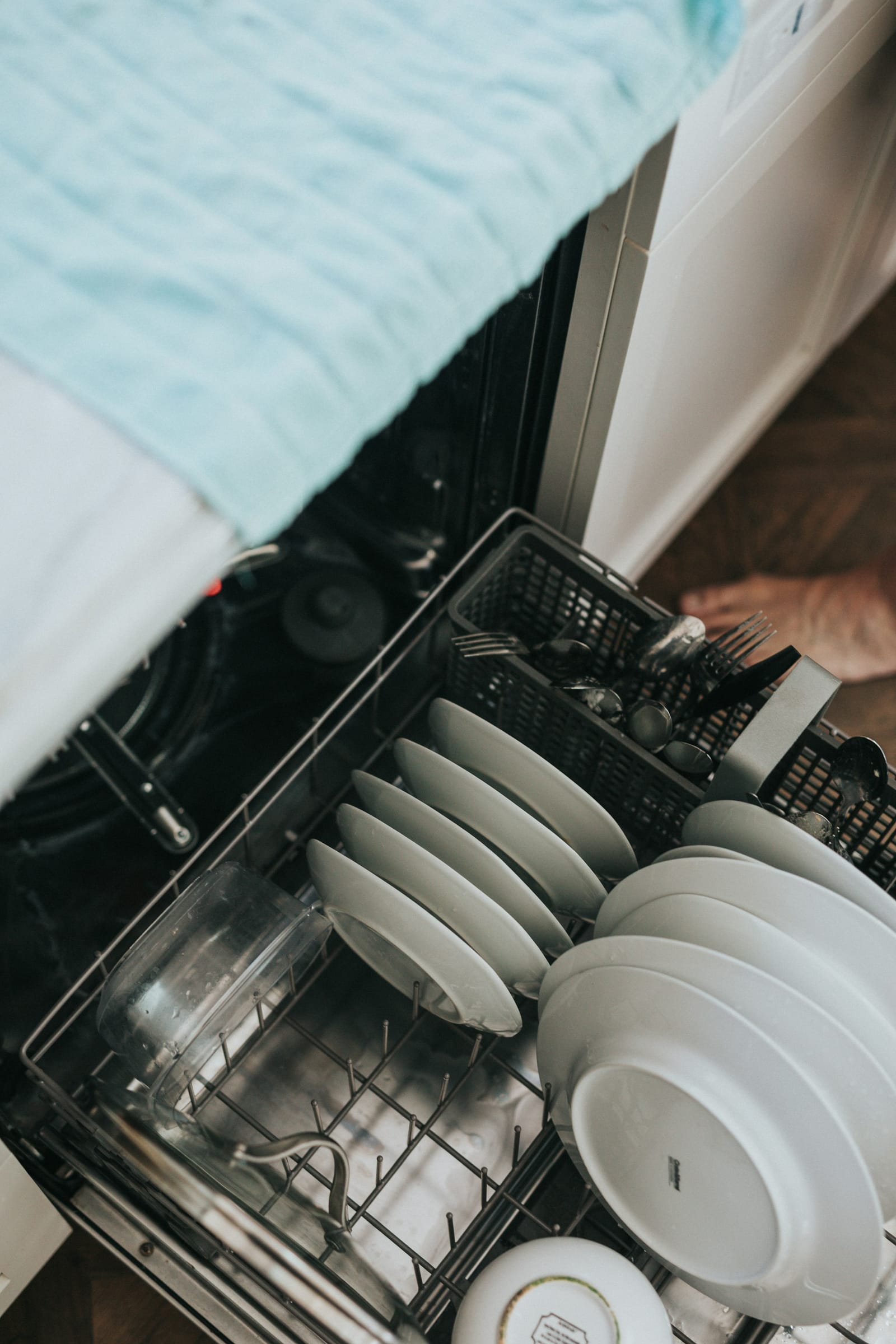
A dishwasher that stops mid-cycle with standing water at the bottom is the most common service call we get in Sydney homes. The good news: a third of these are fixable in ten minutes without a technician. The other two-thirds need a visit. Here’s how to tell which one you have.
1. Blocked sump filter
The most common culprit. The sump filter sits under the lower spray arm; food debris, fruit stones, glass fragments and small bones all end up there. When it clogs, water can’t reach the drain pump.
What to do. Pull out the lower rack. Twist out the round filter assembly (most modern dishwashers from Miele, Bosch, Fisher & Paykel, and Asko use a counter-clockwise twist). Rinse it under the kitchen tap. Run your finger around the sump to check for stray debris. Refit. Run a short cycle to test.
If this fixes it, set a monthly filter clean as a habit. Same routine that prevents most future no-drain calls.
2. Kinked or blocked drain hose
The drain hose runs from the back of the dishwasher to either the kitchen sink waste or a dedicated drain. Two common faults: the hose pinched behind the appliance during installation or removal, or grease and soap scum building up inside the hose over time.
What to do. Pull the dishwasher out (carefully. Power off first, and have someone hold the door so it doesn’t swing). Check the hose visually. If it’s pinched, straighten it. If it looks fine but the dishwasher still won’t drain, the inside of the hose may need clearing. That’s a job for a technician.
3. Air gap or high loop missing
In Sydney, most installations don’t require an air gap (NSW plumbing code differs from US requirements). But the drain hose should still loop up to at least 40 cm above the dishwasher base before going down to the sink waste. Without that high loop, dirty water from the sink can siphon back into the dishwasher. And during drain, the cycle gets confused.
What to do. Look under the sink. The drain hose should loop up to the underside of the bench top before connecting to the waste. If it goes straight horizontal or downhill, the install needs adjustment. This is a plumbing job, not a DIY one.
4. Failed drain pump
The pump is what actually moves water out. It fails in two ways: the motor burns out, or the impeller gets jammed by a fragment of glass, a bone, or a piece of plastic that made it past the filter.
What to do. This is the line where you should call. Diagnosing a pump fault means listening to the motor (a buzz with no movement = jammed impeller; complete silence = burnt motor) and testing voltage. Both are technician jobs.
5. Faulty control board or pressure switch
The least common cause but the most expensive when it happens. The control board tells the drain pump when to run; the pressure switch tells the board when water levels are right. Either failing means the dishwasher doesn’t know to drain.
What to do. Book a service call. Diagnosis requires a multimeter and brand-specific service codes.
When to stop and call
If you’ve cleaned the filter and checked the hose and it still won’t drain, stop. Anything past those two checks needs a technician. Diagnosing a pump or control fault without test equipment usually means making the problem worse.
Book a dishwasher repair or call (02) 9669 4933. We’ll diagnose on the visit and quote the repair before any work starts.